Confined space, maximum challenge: a bespoke lifting solution tested, validated and custom-made
The ITER construction project encountered a unique technical challenge, outside any standard configuration, demanding expertise, testing and confidence.
What happens when a heavy lift project is so unique that no standard solution applies? Narrow margins due to confined space, complex structures and increasingly stringent safety standards make the engineering of a solid lifting configuration almost impossible. In such situations, you require a supplier that offers more than a product: a partner who contributes technical thinking, helps manage risks and understands the material down to the finest detail. That is why our R&D specialists work directly with the customer’s engineers and project teams.
Enduro Softslings, in collaboration with ITER, devised a lifting solution in which space was confined, safety margins were extremely strict and everything had to be demonstrably justified.
A high-technology construction project
ITER is an international collaborative project in France in which 34 countries are working on the construction of a power plant based on nuclear fusion. Its high-technology nature brings with it unique technical and safety challenges. Within the project, a problem arose concerning a specific lifting operation due to high friction, confined space and complex tooling.
arl Buskop, as the technical lead in the assembly hall, is involved in this project. “I am a lifting engineer and operator for special tools, and I support operations where the contractor encounters difficulties in ensuring that assembly proceeds smoothly.”
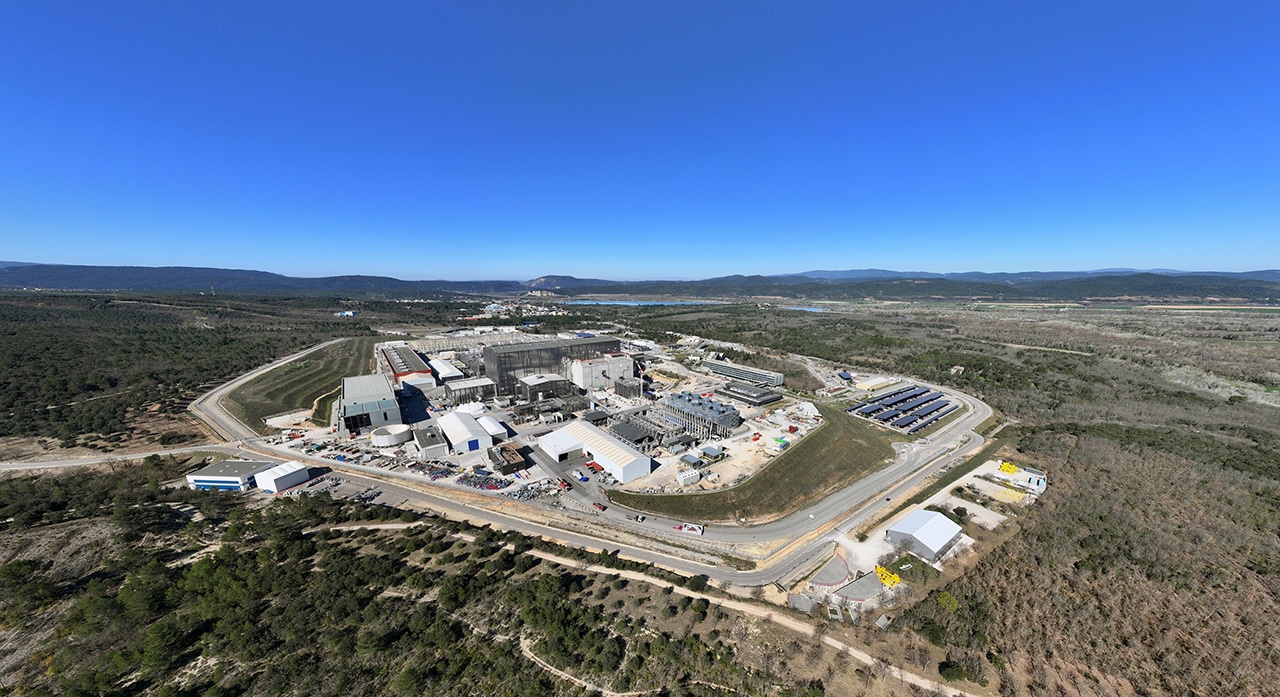
Photo credit: ITER Organization/EJF Riche Source: iter.org
No standard solution available
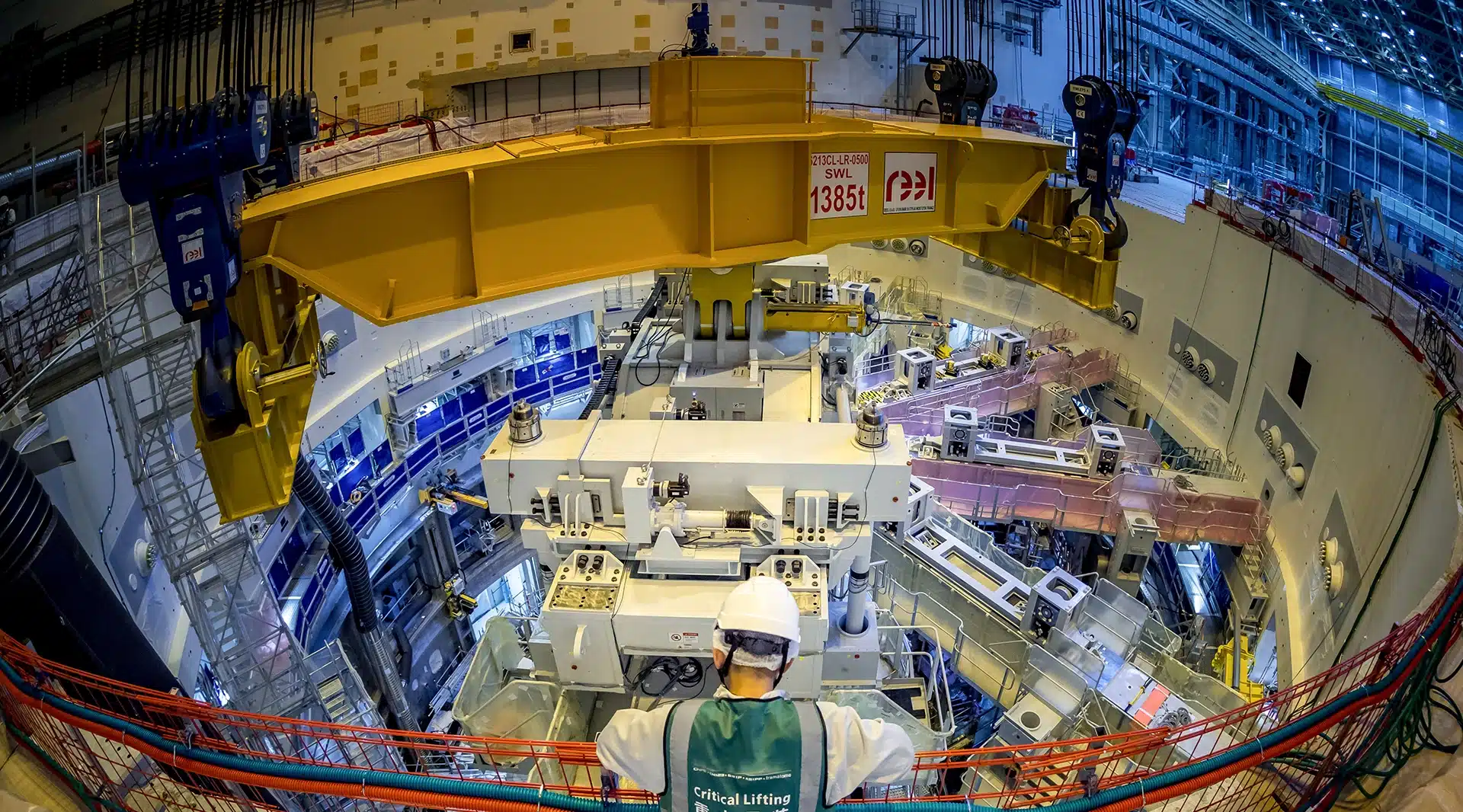
To resolve this, it was decided to suspend the vacuum vessel directly in the crane. This significantly reduced the load on the frictional contact, allowing the vessel to be positioned within the required tolerance. The subsequent challenge lay in the performance of the slings: how would they behave within the confined space of ITER’s existing lifting equipment? It was essential that the existing equipment remain unchanged, as it had been specifically designed for repeated use in future projects. Any modification would not only delay the schedule, but could also jeopardise reliability and compatibility with other components.
A straightforward choice: HMPE softslings
For Buskop, the choice of HMPE softslings was more than logical: “In a hall measuring 60 by 40 metres, space for lifting movements would seem to present no problem. But with all the equipment and components present, the available space is nevertheless limited. When you consider the difference between assembling a rig with steel wire ropes or softslings, it becomes immediately clear: steel wire ropes require additional hardware such as spreader beams and clamps, which not only take up more space but also complicate the assembly. Softslings are more compact, more flexible and easier to use. That was precisely what we needed here.”
Photocredit: ITER Organization Source: iter.org
In addition, softslings are cleaner in use than steel wire ropes. No lubrication is required, which is important in a clean assembly hall. HMPE softslings are also lightweight and flexible, making them easier to handle. This results in a more efficient lifting process and reduces the risk of damage.
Not magic, but physics
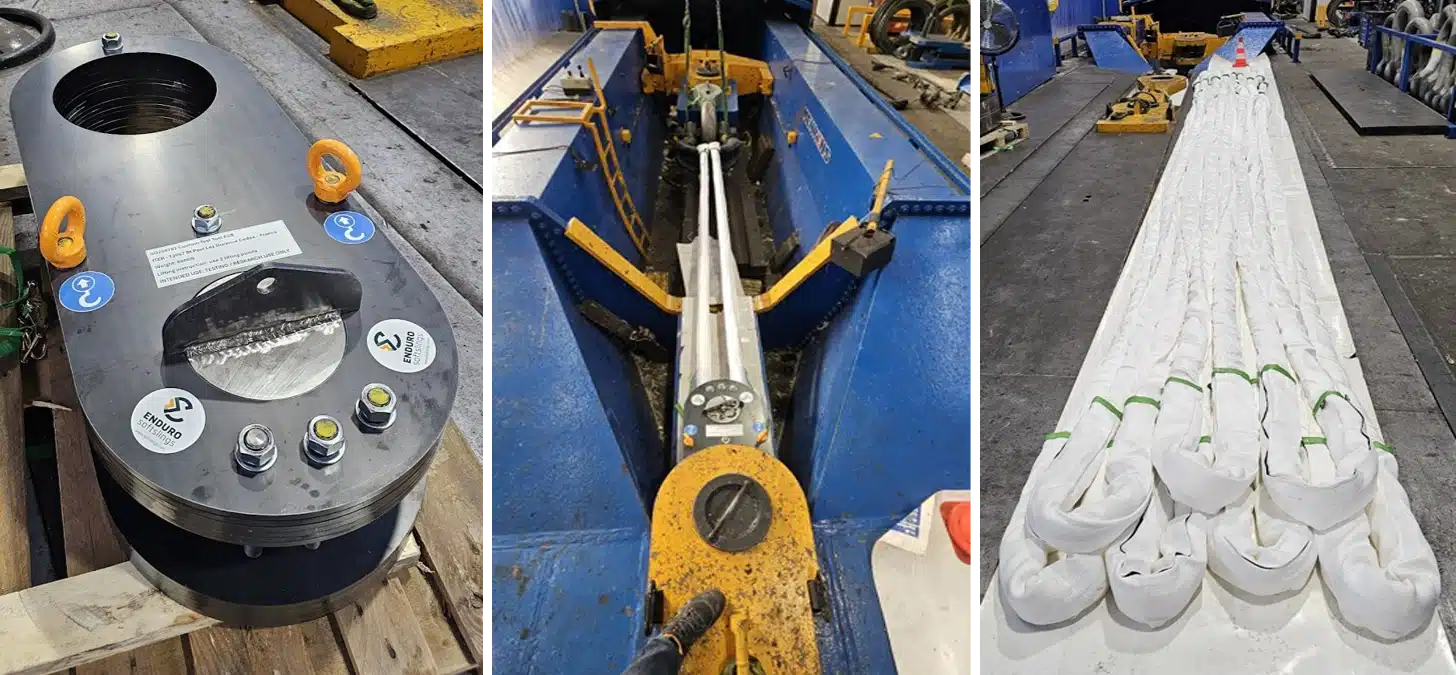
One requirement for this project was that testing be carried out in the actual configuration in which the softslings would ultimately be used. Inspection requirements and operational requirements had to be met in order to preclude any debate over risks.
Buskop emphasises the importance of well-founded, validated data: “By using the slings and the associated lifting equipment during the test in the same manner as in the actual lifting situation, we prevent discussion arising over additional factors, such as the influence of shackles or other supplementary tooling.”
This method of validation makes it possible to establish the loads and safety margins of the sling clearly and transparently. This underpins the safe use of the slings within the design specifications and the required safety factors.
A partner prepared to take responsibility
Our engineers seek simplicity that works, precisely for complex lifting challenges. Our extensive research and trials demonstrate how our material behaves under specific conditions. This yields in-depth knowledge, as Buskop also observed: “The professional approach left no doubt whatsoever about what you know about softslings.”
For the test set-up, we used a simple construction of stacked plates. This provided a comparable simulation of the situation at ITER to verify configurations. Following successful test results, ITER’s existing tooling was replicated and the softslings went into production. This identical test set-up provided the required certainty on the basis of data, testing and experience. Knowledge that translates into predictability and, consequently, confidence in the proposed lifting solution.
In critical projects, every day counts
In complex lifting projects, it is not merely a matter of tonnage or breaking strength. It is about demonstrating certainty. The knowledge that the material behaves as predicted, that calculations correspond with test results, and that there is scope to search jointly for solutions within the safety margins.
Are you seeking certainty in lifting situations where no standard solution applies? The Enduro Softslings R&D team is directly accessible to engineers. Problems are first discussed in the language of physics and safety; only afterwards are quotations and disclaimers addressed. This way of working yields solutions that may not be immediately obvious, but prove to be the most effective technically and, frequently, commercially as well.